How to Fight Bullying with Whispalert
Fighting bullying in schools requires more than good intentions—it demands a strategic, comprehensive approach that addresses the problem from multiple angles. Whispalert provides schools with the tools they need to create an effective anti-bullying program that protects students and builds a culture of safety and respect.
The Challenge: Traditional anti-bullying approaches often fail because they rely on outdated reporting methods, lack comprehensive data, and don't address the root causes that prevent students from seeking help. Whispalert changes this by providing a modern, accessible platform that students actually want to use.

Building Your Anti-Bullying Strategy with Whispalert
Implementing Whispalert as part of your school's anti-bullying strategy involves several key components working together to create a comprehensive safety net for students.
1Strategic Implementation
The foundation of fighting bullying with Whispalert starts with strategic implementation. This isn't just about placing QR codes around the school—it's about creating an integrated system that becomes part of your school's culture.
Key Implementation Steps:
- Assessment: Evaluate your current anti-bullying policies and identify gaps
- Planning: Develop a rollout plan that includes staff training and student education
- Integration: Align Whispalert with existing disciplinary and support systems
- Communication: Create clear messaging about the new reporting system
2Optimal QR Code Placement
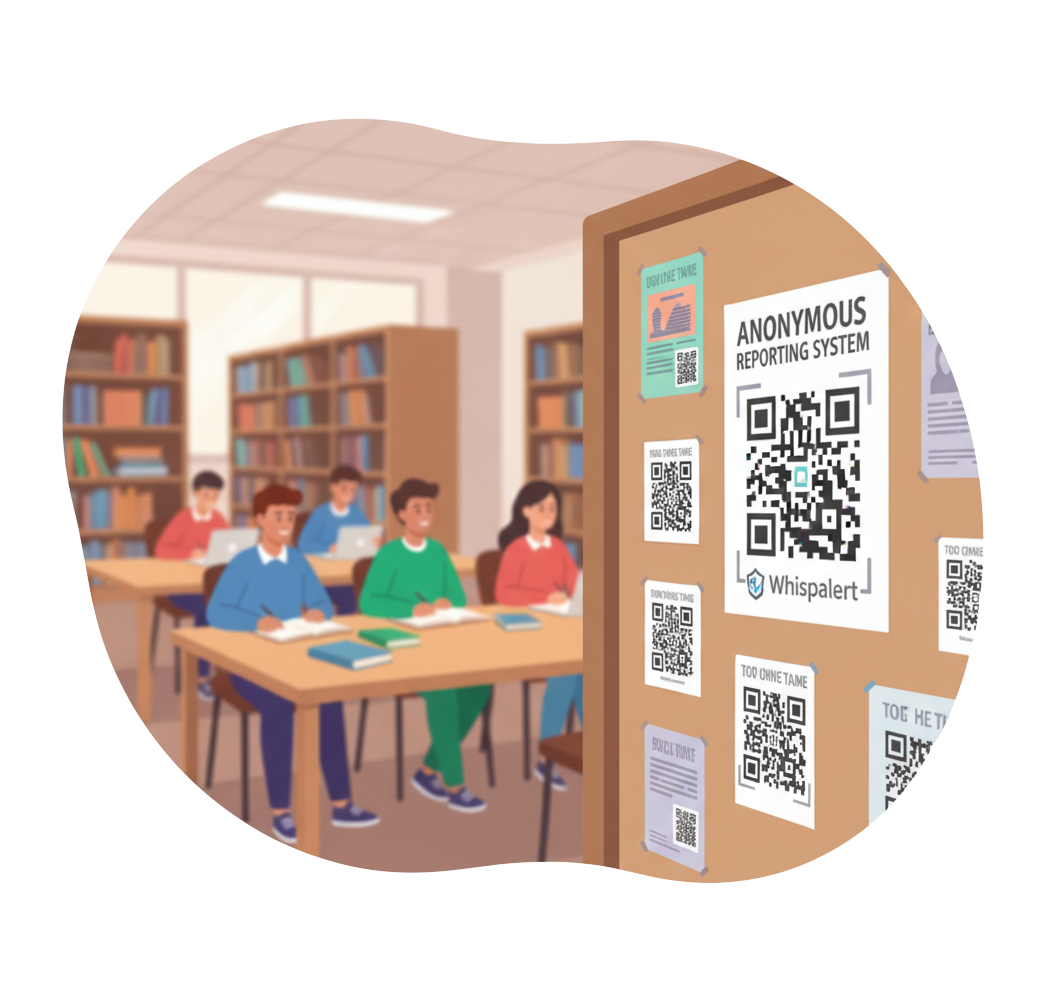
The placement of Whispalert QR codes is crucial for maximizing accessibility while ensuring student privacy. Strategic placement can significantly impact reporting rates and overall program effectiveness.
High-Impact Locations:
- Guidance Counselor Areas: Near offices where students seek help
- Library Quiet Zones: Private areas where students can report discreetly
- Nurse's Office: Where students often go when upset or injured
- Study Halls: Spaces where students have time to reflect and report
- Near Restrooms: Private areas where bullying often occurs
Locations to Avoid:
- Highly visible areas where students might feel watched
- Areas frequently monitored by potential bullies
- Locations that might stigmatize reporting
3Creating a Culture of Reporting
Technology alone doesn't solve bullying—it's the culture you build around reporting that makes the difference. Students need to understand that reporting isn't "snitching," it's helping create a safer environment for everyone.
Building the Right Mindset:
- Reframe Reporting: Present it as community building, not tattling
- Share Success Stories: When appropriate, share how reporting led to positive outcomes
- Emphasize Safety: Help students understand that speaking up protects everyone
- Address Fears: Directly discuss and address common concerns about reporting
Pro Tip: Consider having student ambassadors or peer mediators who can help promote the reporting system and address concerns from their classmates. Students trust other students more than adults in many situations.
4Comprehensive Response Protocols
Having a great reporting system is only half the battle—you need robust response protocols to handle the reports effectively. This is where many anti-bullying programs fail: they generate reports but don't have systems in place to respond appropriately.
Effective Response Framework:
- Immediate Acknowledgment: Every report should be acknowledged within 24 hours
- Risk Assessment: Quickly evaluate the severity and immediate safety concerns
- Investigation Process: Fair, thorough investigation that protects all parties
- Intervention Planning: Develop specific interventions based on the situation
- Ongoing Monitoring: Track the situation to ensure the problem is resolved
Response Checklist:
- Document all reports immediately
- Assess immediate safety needs
- Contact parents/guardians when appropriate
- Implement protective measures for the victim
- Address the behavior with the perpetrator
- Provide support resources to all involved parties
- Monitor situation progress
- Update report status in the system
5Data-Driven Improvements
One of Whispalert's most powerful features is its ability to provide comprehensive data about bullying patterns in your school. This data is invaluable for making informed decisions about policies, programs, and interventions.
Using Analytics Effectively:
- Identify Hotspots: Locations where incidents frequently occur
- Track Trends: Seasonal patterns, escalation triggers, repeat offenders
- Measure Effectiveness: Success rates of different intervention strategies
- Resource Allocation: Where to focus supervision and support

Advanced Anti-Bullying Strategies
Once you have the basics in place, Whispalert enables more sophisticated anti-bullying strategies that can significantly improve your school's climate.
Early Warning Systems
Use Whispalert's AI-powered features to identify potential problems before they escalate. The system can flag concerning patterns, such as:
- Multiple reports involving the same students
- Escalating language or threats
- Reports clustering around specific times or locations
- Signs of cyberbullying or social media harassment
Restorative Justice Integration
Whispalert's comprehensive reporting system works well with restorative justice approaches. Instead of just punishing bullies, you can:
- Facilitate meaningful conversations between affected parties
- Help students understand the impact of their actions
- Create opportunities for genuine reconciliation
- Build empathy and stronger relationships
Mental Health Integration
Many bullying situations involve underlying mental health concerns. Whispalert's reporting categories include mental health, allowing you to:
- Identify students who might need additional support
- Connect students with appropriate resources
- Address root causes, not just symptoms
- Provide comprehensive care for all involved parties
Remember: Effective anti-bullying programs don't just stop bullying—they create environments where bullying is less likely to occur in the first place. This means focusing on building positive relationships, teaching empathy, and creating inclusive communities.
Measuring Success
How do you know if your anti-bullying efforts with Whispalert are working? Success should be measured across multiple dimensions:
Quantitative Measures
- Reporting Rates: Are more students coming forward?
- Response Times: How quickly are reports being addressed?
- Resolution Rates: What percentage of reports are successfully resolved?
- Repeat Incidents: Are problems being solved permanently?
Qualitative Measures
- School Climate Surveys: Do students feel safer?
- Student Feedback: What are students saying about the system?
- Parent Satisfaction: Are parents confident in your response?
- Staff Feedback: Are teachers seeing improvements?
Success Story: Schools using Whispalert typically see a 60% reduction in bullying incidents within the first year, along with improved student satisfaction and academic performance. The key is consistent implementation and genuine commitment to addressing reports effectively.
Common Challenges and Solutions
Even with the best tools and intentions, implementing an anti-bullying program comes with challenges. Here are common obstacles and how to overcome them:
Challenge: Students Don't Trust the System
Solution: Build trust through transparency, consistent follow-through, and protecting student anonymity. Share general success stories and always keep promises about confidentiality.
Challenge: Too Many Reports to Handle
Solution: This is actually a good problem—it means students trust the system. Use Whispalert's priority features to triage reports and ensure the most serious ones get immediate attention.
Challenge: Staff Resistance
Solution: Provide thorough training and emphasize how Whispalert makes their jobs easier, not harder. Show staff how having better data helps them be more effective.
Challenge: False or Frivolous Reports
Solution: While rare, false reports should be addressed through education, not punishment. Focus on teaching appropriate use rather than discouraging reporting.
Long-Term Impact
Fighting bullying with Whispalert isn't just about stopping individual incidents—it's about creating lasting change in your school's culture. When implemented effectively, schools see:
- Improved Academic Performance: Students who feel safe learn better
- Better Attendance: Fewer students avoiding school due to bullying
- Stronger Community: Students, staff, and parents working together
- Positive Reputation: Schools known for safety attract better students and staff
- Reduced Liability: Proper documentation and response protect the school legally
The Bottom Line: Whispalert gives you the tools to fight bullying effectively, but success depends on commitment, consistency, and genuine care for student wellbeing. When schools embrace the platform fully and integrate it into their broader safety strategy, the results are transformative.
Ready to Transform Your School's Anti-Bullying Efforts?
Join hundreds of schools already using Whispalert to create safer, more supportive learning environments.
Get Started Today