How to Handle Anonymous Tips That Lack Enough Detail
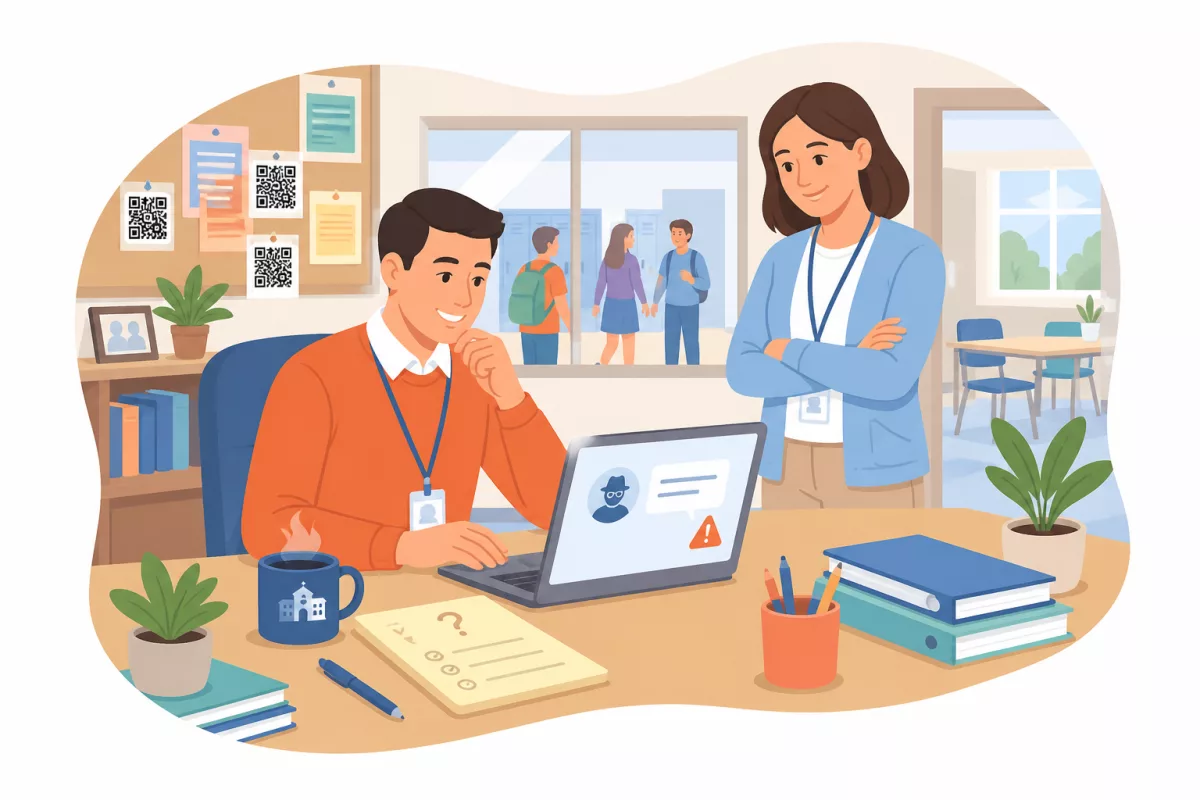
A tip arrives on a Tuesday morning: "Something is going to happen in the east hallway." No name, no time, no student, no context. The administrator reading it has three bad options: ignore it, panic, or file it and hope. Knowing how to handle anonymous tips that lack enough detail is one of the most practical skills a school safety team can build, because vague tips are far more common than clean, complete ones.
The short answer: treat every thin tip as a starting point, not a verdict. Triage it for severity within minutes, compare it against what you already know, look for a safe way to ask the reporter for more, and take a proportionate, low-visibility action while you keep gathering information. Then document what you did and why. You do not need certainty to respond. You need a consistent process that scales your response to the level of risk.
Why Vague Tips Deserve a Real Process
Students rarely report like investigators. They report like scared, uncertain, or conflicted teenagers (or ten-year-olds). They may have overheard half a conversation, seen a worrying post for two seconds, or feel unsure whether what they noticed is "bad enough" to mention. They type what they can in a minute or two, often between classes, and they worry about being identified. The result is a short message with missing pieces.
That brevity is not a sign of low value. A tip that says "a kid in my third period is being weird about a gun" is thin, but the word "gun" changes everything about how fast you move. A tip that says "people are being mean to a girl in the locker room" is also thin, but it may be the first visible edge of a long pattern of bullying. Detail and urgency are separate dimensions. Your process should not confuse them.
There are also two opposite failure modes worth naming:
- Dismissal: "We can't act without a name." This teaches students that reporting is pointless, and the next tip may never come.
- Overreaction: locking down, searching, or confronting students based on a sentence of text. This can harm innocent students, expose the reporter, and erode trust just as badly.
A good process sits between those two. It is calm, fast, and proportionate.
How to Handle Anonymous Tips That Lack Enough Detail, Step by Step
1Triage for severity first, detail second
Before you worry about what is missing, ask one question: if this is true, how bad could it be? Sort the tip into a rough tier.
- Immediate risk: mentions of weapons, specific threats of violence, self-harm with a plan or timeline, or an event happening now.
- Serious but not imminent: ongoing harassment, signs of abuse, suicidal comments without a timeline, drug distribution, threats that sound like venting.
- Low acuity: general complaints, rumors, behavior concerns, or conflict between peers with no safety implication.
Immediate-risk tips go to your threat assessment lead or administrator right away, even with almost no detail. If your team uses a platform that flags critical alerts automatically, that flag should shorten the time to human eyes, not replace human judgment. A missing name does not lower a weapons tip to a "wait and see."
Key point: The less detail a tip has, the more important it is to judge it by the worst plausible meaning of what it does say. Vague and dangerous can coexist. Vague and harmless can too. Triage tells you which one to assume while you learn more.
2Compare the tip against what you already know
A single thin tip is a dot. Several dots form a picture. Before deciding the tip is a dead end, check it against:
- Earlier anonymous reports mentioning the same location, time of day, group, or behavior
- Recent discipline referrals, attendance changes, or counselor notes (within what your policies allow)
- Social media concerns or screenshots staff have already received
- Teacher or staff observations about that area, class, or friend group
"Something is going to happen in the east hallway" means little alone. If two other tips this month mentioned a conflict near the east stairwell after fourth period, it means a lot. This is where reporting history pays off. Schools that review tips as a running record, rather than one-off messages, catch patterns that individual messages hide.
3Ask for more, safely
If your reporting system allows anonymous two-way follow-up, use it. Keep the question short, specific, and non-accusatory. Good follow-ups sound like this:
- "Thank you for telling us. Can you share where this happened or roughly when?"
- "Is anyone in immediate danger right now?"
- "Is this something that has happened once, or has it been going on for a while?"
Ask one or two questions, not ten. Never ask "Who are you?" or anything that nudges the reporter toward identifying themselves. Anonymity is the whole reason they spoke up. If your system does not support follow-up, you can still broadcast a general invitation, such as a reminder in an announcement that any report can include more details at any time, and that the school is listening.
Pro tip: Write three or four follow-up message templates ahead of time (for threats, bullying, self-harm, and general concerns). When a tip arrives at 7:40 a.m., nobody should be drafting wording from scratch. Pre-written, reviewed language is warmer and safer.
4Take a proportionate, low-visibility action
Not enough detail to confront anyone does not mean nothing to do. There is a wide band of actions that protect students without pointing a finger:
- Increase adult presence in the named location or time window. Staff standing in a hallway is normal and quiet.
- Check in with likely-affected students in a natural way, such as a counselor "wellness check" that is part of a broader round and not tied to a specific tip.
- Brief a small circle (counselor, resource officer if you have one, relevant assistant principal) so more eyes are open.
- Review camera footage for the area if your policy allows and the tip justifies it.
- Weave the theme into existing lessons, such as a class discussion on respect or online conduct, without referencing the tip.
The principle is simple: the more severe the possible harm, the more active your response can be, even on thin information. The less severe, the more you lean on observation and gentle prevention.
5Document, set a review date, and close the loop
Write down what the tip said, how you triaged it, what you checked, what you did, and when you will look again. Two or three sentences is enough. A "revisit in one week" note matters, because many vague tips become meaningful only after a second or third report arrives.
Then, where possible, let students know the system works. You cannot share specifics, but you can say things like "We received a concern about hallway safety and have added staff supervision." That message tells students their report mattered without revealing anything about who sent it.
Mistakes That Make Thin Tips Worse
Trying to unmask the reporter
When a tip is frustratingly vague, it is tempting to wonder who wrote it. Resist that. Guessing, questioning students about who might have reported, or tracing devices destroys trust quickly, and word travels fast. One identified reporter can quiet an entire student body for a year.
Confronting the named student too early
If a tip names a student but offers no evidence, a direct accusation can be unfair and counterproductive. A supportive check-in from a trusted adult usually gives you far more information than an interrogation, and it protects a student who may be innocent.
Treating "no detail" as "no credibility"
Credibility and completeness are different. Students often leave out details because they are afraid, not because they are lying. Weigh the content, the context, and the pattern, not the word count.
Letting tips sit in an inbox
The most common failure is not a wrong decision. It is no decision. A vague tip that is reviewed on a set schedule, even to conclude "monitor only," is handled. A vague tip that nobody opened is a liability.
Reduce Vagueness at the Source
You cannot make students write better tips, but you can make it easier for them to include useful details. A few design choices help a lot:
- Use guided prompts. A form that asks "Where did this happen?" "When?" and "Is anyone in danger now?" gets more usable information than a blank box. Short, optional fields lower the barrier.
- Place access points where incidents happen. QR codes posted in restrooms, near the cafeteria, and in hallways let students report in the moment, when details are fresh. Tools like WhispAlert are built around that model, with QR-based anonymous reports and AI flagging for critical alerts so urgent messages rise to the top.
- Teach students what a helpful tip looks like. A short assembly or advisory lesson on "what, where, when, who (if you know)" works. Reassure them that partial information is welcome.
- Promise nothing you cannot deliver. Be honest that you may not be able to share outcomes, but you will always review what comes in.
Over time, look at the aggregate. Monthly summaries of report volume, locations, and categories help you see where tips cluster and which areas of campus keep surfacing. A single vague message might tell you little, but twelve vague messages about the same stairwell tell you exactly where to put a supervisor. A monthly intelligence report, whether built by hand or generated by your reporting tool, turns scattered fragments into direction.
A Simple Protocol You Can Adopt This Week
You do not need a new program. You need a shared, written routine that everyone who reads tips follows the same way. Start with the checklist below and adapt it to your policies, your staffing, and your district's guidance. If your school has a formal threat assessment team, loop them in on the severity tiers so your triage language matches theirs.
Vague tip response checklist:
- Read the tip and assign a severity tier within minutes of receipt
- Escalate immediately if it mentions weapons, specific threats, or self-harm with a plan
- Check prior tips, referrals, and staff observations for matching patterns
- Send a brief, non-identifying follow-up question if two-way messaging is available
- Choose a proportionate, low-visibility action such as added supervision or a routine check-in
- Document the tip, your reasoning, your actions, and a review date
- Share a general, non-specific update with students when appropriate
- Review tip trends monthly and adjust supervision, lessons, and reporting prompts
Anonymous tips will always be imperfect. Students will keep writing short, unclear, sometimes confusing messages, because that is how people talk when they are worried and want to stay safe themselves. The schools that handle them best are not the ones that get the most detail. They are the ones that respond predictably, protect the reporter, and treat every small signal as part of a bigger picture.
Related articles
Ready to Make Your School Safer?
Join hundreds of schools already using Whispalert to create safer, more supportive learning environments.
Get Started Today