How to Investigate a Bullying Report in Middle School
A report lands in your inbox on Tuesday morning: a seventh grader says a group of classmates has been excluding her, mocking her in a group chat, and shoving her in the hallway. You have a full schedule, three other fires, and a family waiting to hear from you. What do you do first?
Here is the short answer to how to investigate a bullying report in middle school: make sure the targeted student is safe today, document the report exactly as received, interview students separately and in a sensible order (target, witnesses, then the student accused), compare what you hear against any physical or digital evidence, decide whether the behavior meets your policy definition, and then act and follow up. Speed matters, but so does fairness. A rushed investigation that gets the facts wrong hurts everyone, including the student who was actually targeted.
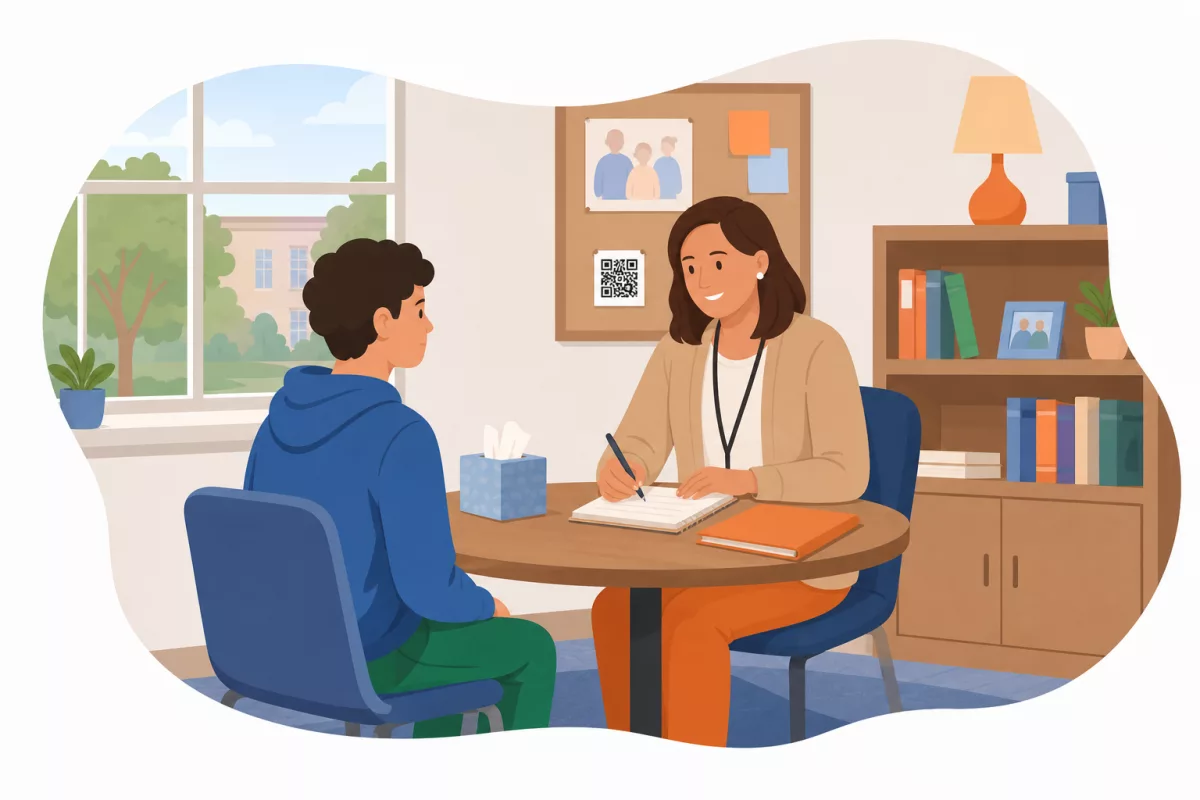
Why Middle School Investigations Are Different
Middle schoolers are in the thick of social reorganization. Friend groups shift weekly, status matters enormously, and many students are still learning the difference between a conflict, a joke that went too far, and sustained targeting. That makes investigations harder in a few specific ways.
- Accounts are often emotional and incomplete. A student may leave out their own role, or describe a months-long pattern as one bad day.
- Much of the behavior is invisible to adults. Group chats, social media, locker rooms, buses and unsupervised corners of the cafeteria are where a lot of it happens.
- Retaliation fear is high. Students worry that being seen talking to an administrator will make things worse.
- Roles blur. A student who was targeted last month may be the one excluding someone this month.
Your process needs to account for all of this. The goal is not to build a courtroom case. It is to find out what is happening, stop it, and protect the student who is hurting.
The Step-by-Step Process to Investigate a Bullying Report in Middle School
1Secure safety first
Before you gather a single fact, ask whether the reporting student is in immediate danger or distress. If there is a physical threat, a self-harm concern, or fear of an attack, that takes priority over everything else, and you should follow your threat assessment or crisis protocol.
For lower-level situations, small steps help right away: adjust seating, let a counselor check in, make sure the student knows which adult to go to, and quietly increase supervision in the places where incidents are described. Do these without announcing them in a way that exposes the student.
2Document the report as received
Write down who reported, when, how (in person, email, anonymous tip, parent call), and the exact words used where possible. Record the date and time you received it. Many state laws and district policies set a window for starting or completing an investigation, so the clock may already be running. Check your own policy and write the start time down.
If the report came anonymously, treat it as a lead, not a verdict. Anonymous reports are valuable precisely because they surface things students would not say out loud, but they need corroboration like any other starting point. If your school uses an anonymous reporting tool such as WhispAlert, the original submission, timestamp and any location details become the first entries in your file.
3Preserve evidence early
Digital evidence disappears fast. Messages get deleted, posts get edited, accounts go private. Ask the reporting student or family to screenshot messages with the date, username and conversation context visible. Do not ask students to forward you explicit images; follow your district's guidance and involve your resource officer or legal counsel if sexual content is involved.
Also check for the less obvious sources:
- Hallway, bus and cafeteria video, which is often overwritten on a short cycle
- Prior discipline or counseling notes involving the same students
- Previous reports that mention the same names or locations
- Teacher observations from the relevant classes
4Plan the interviews
Order matters. A reasonable sequence is the reporting student, then witnesses, then the student or students accused. Interviewing the accused first can tip them off before you have the full picture, and it may expose the reporter before you have put protections in place.
Decide who will conduct the interviews and who will take notes. Two adults in the room is better than one, with the second person documenting. A counselor or assistant principal is a common pairing. Choose a private space that is not the principal's office if you can, since that setting can feel like punishment to a twelve-year-old.
Pro tip: Interview students separately and as close together in time as you can. If the accused student hears about the interview from a friend before you speak, their story has time to be rehearsed, and the target may face pressure before you can protect them.
5Conduct the interviews with open questions
Start by explaining why you are talking to them and what will stay confidential and what cannot. Never promise total secrecy, since you may need to act on what you hear, but do promise that you will think carefully about how information is shared.
Then use open, non-leading prompts:
- "Tell me what has been going on."
- "When did this start? How often does it happen?"
- "Where does it happen? Who is around?"
- "Has anyone else seen it? Is it happening online too?"
- "What have you tried? What would help right now?"
Avoid questions like "Did he bully you?" because the label becomes the answer. Ask about behavior: what was said, what was done, how many times. For the accused student, stay neutral. Describe what has been reported, ask for their perspective, and listen for specifics rather than just denial or confession. Many students will minimize ("we were just joking"), and that is information too, though not proof in either direction.
For witnesses, thank them and reassure them they are not in trouble. Bystanders are often the most honest source in the building, and how they are treated in this conversation determines whether they come forward next time.
6Compare accounts and make a finding
Lay out what each person said, what the evidence shows, and where the accounts agree and conflict. You are looking for patterns that meet your policy definition. Most definitions hinge on a few elements: unwanted aggressive behavior, an imbalance of power (real or perceived), and repetition or the likelihood of repetition. Check your state law and district policy, because definitions vary, and some require you to address harassment tied to protected characteristics under a separate process.
Be honest about uncertainty. Sometimes the finding is "this meets the definition," sometimes "this was mutual conflict that still needs intervention," and sometimes "we could not substantiate it, but we are keeping an eye on the situation." The third outcome is not a failure, as long as the student who reported still gets support and monitoring.
Key point: "Unsubstantiated" does not mean "nothing happened." A student who took the risk to report deserves a check-in, a trusted adult, and continued attention, even when the evidence falls short of a formal finding.
Responding After You Reach a Finding
Match the response to the behavior
Consequences and supports should fit what you found. A one-time unkind comment calls for a different response than months of coordinated exclusion or physical intimidation. In many middle school cases, a combination works best: an accountability measure (loss of privileges, a documented warning, a parent meeting, or suspension for serious cases) alongside something that addresses the underlying behavior, such as counseling, social skills coaching, or a structured restorative conversation.
Be cautious about mediation or face-to-face conflict resolution between a target and the student who targeted them. When there is a real power imbalance, forcing the two together can re-traumatize the target. Restorative approaches can work well, but only when the targeted student chooses to participate and a trained adult prepares both sides.
Communicate with families carefully
Contact the parents of the targeted student and the parents of the accused student separately, and do it promptly. Share what you can about what you found and what steps you are taking, while respecting student privacy laws. You generally cannot share discipline details about another child, and you should say so plainly rather than leaving families guessing about why you are being vague.
Families are often angry, scared or defensive. Listening first, then laying out your process and timeline, tends to calm things more than a polished explanation does. Put your key points in writing afterward.
Follow up on a schedule
This is the step most schools skip, and it is where bullying often resumes. Set specific check-ins, for example at one week, three weeks and six weeks. Ask the targeted student directly: "Has anything changed? Is it better, the same, or worse?" Also watch for retaliation, which can be subtle (a new rumor, an exclusion from a lunch table, a message from a friend of the accused student). If the behavior returns, escalate rather than starting over from scratch.
Common Mistakes That Undermine an Investigation
- Treating it as "he said, she said" and closing it. Patterns across multiple witnesses, prior reports and digital evidence usually tell a clearer story than two competing accounts.
- Telling the student to "just ignore it." This signals that adults will not act, and it often ends reporting for good.
- Revealing the reporter. Even a casual remark ("I heard you were upset about...") can expose a source and chill future reports.
- Interviewing the target and the accused together. This can intimidate the target and compromise both accounts.
- Skipping documentation. If the situation escalates or a family files a complaint, a thin file is hard to defend and hard to learn from.
- Stopping at discipline. Punishment alone rarely changes behavior. The student who bullied others usually needs skills and supervision too.
- Ignoring the pattern across reports. Three separate "minor" reports about the same hallway or the same group are one significant problem.
That last point is worth dwelling on. Individual investigations answer the question "what happened here?" Looking across reports answers "what keeps happening in our school?" Reviewing trends by location, time of day, grade and recurring names helps you move supervision, adjust schedules, and spot a student who appears in report after report. Monthly summary reports, like the intelligence reports WhispAlert generates for administrators, can make those patterns easier to see without combing through individual files.
Build a Process Your Team Can Repeat
The best investigations are not heroic. They follow a script that anyone on your team can pick up on a busy day. Write your steps down, assign roles (who receives reports, who interviews, who contacts families, who tracks follow-up), and review a closed case or two each term to see what you would do differently. Train teachers on what to do when a student tells them something, since many reports reach an adult informally before they ever reach you.
Students notice whether their reports lead to anything. When they see that a report produces a calm, fair, and visible response (even if they never learn the details), more of them speak up. That is the real payoff of a solid investigation process: it makes the next report more likely, and the next problem easier to catch early.
Bullying investigation quick checklist:
- Confirm the targeted student is safe and supported today
- Log the report, source, date and time received
- Check your policy and legal timelines
- Preserve screenshots, video and prior records quickly
- Interview the target first, then witnesses, then the accused, separately
- Use open, behavior-focused questions and take detailed notes
- Compare accounts and evidence against your policy definition
- Choose both accountability and support for the student who bullied
- Contact both families separately and promptly
- Schedule check-ins at one, three and six weeks
- Review reports for patterns by location, time and student
Related articles
Ready to Make Your School Safer?
Join hundreds of schools already using Whispalert to create safer, more supportive learning environments.
Get Started Today