How to Support a Student Who Was Bullied After Returning to School
The hardest moment for a bullied student is often not the incident itself. It is the morning they have to walk back through the front doors, knowing everyone may know, and not knowing who will be waiting. If you are wondering how to support a student who was bullied after returning to school, the short answer is this: plan the return before it happens, make the student feel physically and socially safe from the first minute, assign one trusted adult, and keep checking in long after the attention fades.
That means four things in practice. Hold a short re-entry meeting with the student and family. Build a simple safety plan the student helped shape. Name one adult as their anchor. Then follow up on a schedule, not just when something goes wrong. The rest of this article walks through each piece, including what to say, what to avoid, and how to spot trouble early.
Why the Return Is a Risk Point
When a student comes back after bullying, whether they were absent for a few days, stayed home for weeks, or simply returned after a serious incident, they carry a few worries at once. They may fear retaliation for having told an adult. They may fear that peers are gossiping. They may feel embarrassed that adults now know how vulnerable they felt. And many quietly wonder whether telling was worth it.
How the school handles the first week answers that last question. If the student sees a calm, organized, respectful response, they learn that speaking up leads to real help. If they see confusion, awkward public attention, or no follow-through, they learn the opposite, and they are less likely to report next time.
Key point: A bullied student is watching for one thing above all: does telling an adult make my life better or worse? Every decision in the return plan should tilt toward better.
Before the Student Walks Back In
The best returns are prepared in advance. Even a twenty minute conversation can change the whole experience.
Meet with the student and family first
Ask the student what they need rather than assuming. Some want a quiet arrival and no mention of what happened. Others want to know exactly what consequences were applied. Some want a change in schedule or seating. Listen for specifics: which hallway, which lunch period, which bus stop, which group chat. Those details become the safety plan.
Be honest about what you can and cannot promise. You can promise to act quickly and to keep them informed. You usually cannot promise that the other student will be punished in a particular way, because discipline and student privacy rules limit what you can share. Saying that plainly builds more trust than a vague reassurance you cannot keep.
Brief only the staff who need to know
Teachers, the bus driver, lunch supervisors, and the front office staff who will see the student need enough information to be alert. They do not need every detail. Share the minimum necessary: the student may need extra attention, here is where the risk points are, and here is who to tell if you see something. Ask staff not to single the student out in class or ask how they are feeling in front of peers.
How to Support a Bullied Student After Returning to School: A Step-by-Step Plan
Once the groundwork is set, these five steps give the return a clear structure. Adjust them to the age of the student and the severity of what happened.
1Create a soft landing on day one
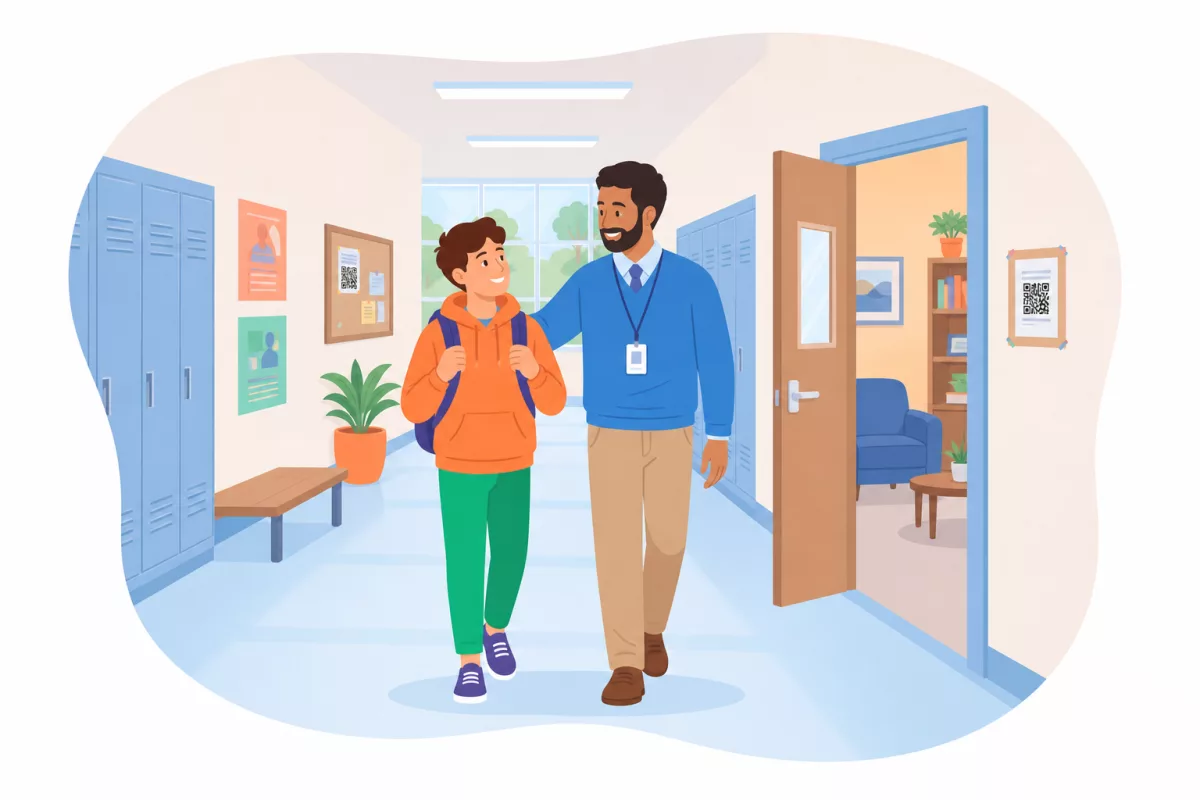
Have the student arrive a few minutes early or through a less crowded entrance if they prefer. Let the anchor adult greet them privately, then walk them to first period. Avoid a big welcome. A warm, ordinary greeting says you are glad they are here without turning them into the center of attention.
2Name one anchor adult
This is the single most useful step. The anchor can be a counselor, a favorite teacher, a coach, or an assistant principal. What matters is that the student chose or agreed to the person, and that the person has a reliable reason to see them. Plan a brief check-in every day for the first week. It can be two minutes at a doorway: "How is today going? Anything I should know about?"
Give the student a clear way to reach the anchor between check-ins, such as a pass to the counseling office that does not require explaining themselves to a teacher. Many students will not use it. Knowing it exists still lowers anxiety.
3Make the safety plan concrete
A useful plan fits on half a page. It covers where the student will be during unstructured times, who they can go to if something happens, and what staff will do if they see the other student approach. Common elements include:
- An alternate route between classes or an early release from class to avoid crowded hallways
- A seating change at lunch or on the bus, with a supervising adult nearby
- A designated safe space for lunch or recess if the student wants one
- A clear plan for online contact, including who will monitor and how the student can report it
- A date for the first review of the plan, ideally within one week
Give the student a copy, and give the family one too.
4Give the student a low-risk way to speak up
Students often hold back because reporting feels exposing. They worry about being seen walking into the office, about being called a snitch, or about making things worse. Offer more than one channel: the anchor adult, a trusted teacher, and an anonymous option. If your school uses an anonymous reporting tool such as WhispAlert, remind the student that they can scan a QR code and report without giving their name, and that friends or bystanders can do the same. Many incidents of renewed targeting are first noticed by someone other than the target.
5Address academics and attendance gently
A student who missed school will be behind, and being behind is its own source of stress. Work with teachers to reduce the catch-up load for the first week or two. Prioritize essential assignments and offer a plan for the rest. A student who feels buried in make-up work may start avoiding school again, and then the original problem has a second one stacked on top.
Pro tip: Ask the student to rate their week on a simple 1 to 5 scale at each check-in, then ask what would make it one point better. It gives a shy student an easy way to answer and gives you a trend you can actually track.
What to Watch for in the Following Weeks
The first few days tend to get the most attention. The risk often shows up later, once adults relax and peers start to talk. Keep watching for signs that the plan is not working.
Warning signs in behavior
- Frequent trips to the nurse, especially with stomachaches or headaches, at predictable times such as before lunch or a specific class
- Requests to call home, skip a class, or stay in the counseling office
- Sudden drops in grades or participation
- Withdrawal from friends, activities, or things they used to enjoy
- Changes in sleep, appetite, or mood that a parent mentions
- Strong reactions to phones, notifications, or group chats
No single sign proves anything. A pattern is what matters. If you see two or three of these together, treat it as a reason to check in privately and review the plan.
Take mental health seriously
Being bullied can contribute to anxiety, depression, and in some cases thoughts of self-harm. Do not wait for a student to volunteer that they are struggling. If a student says anything that suggests they may hurt themselves, or if you are worried, follow your district's protocol right away and involve a counselor or school psychologist. Offer a referral to counseling support early, and present it as normal help after a hard experience, not as a sign that something is wrong with them.
Watch the digital side
Much bullying continues or begins after school hours in group chats, social media, and gaming platforms. Ask the student and family, without judgment, whether anything is still happening online. Encourage them to save screenshots rather than delete messages. Make sure the student knows school staff can act on online behavior that spills into school life, even if it happened off campus, within the limits of your policy.
Handling Peers, Rumors, and the Other Student
Supporting the targeted student is only half the job. What happens around them shapes whether they feel safe.
Don't force a face-to-face apology
Mediation and forced apologies between a bullied student and the student who targeted them can backfire. Bullying involves a power imbalance, and sitting the two together can put pressure on the target to accept an apology they do not feel. Restorative approaches can help in some cases, but only when the targeted student wants to take part, the other student has taken responsibility, and trained staff are running the process. When in doubt, focus on accountability for the other student and safety for the target as separate tracks.
Respond to rumors early
If gossip is spreading, a short, calm word with the students driving it usually works better than a full assembly. Remind them that the school takes harassment seriously, that spreading details is also harmful, and that there are consequences for continued behavior. Avoid sharing details about the incident or the discipline, even to correct false stories. Silence from the school on specifics is appropriate.
Recruit supportive peers carefully
A friendly classmate can make a huge difference at lunch or in the hallway. Where appropriate, ask a few students with good judgment to include the returning student in activities. Do it quietly and never reveal why. The goal is natural inclusion, not a "buddy" arrangement that spotlights the student as someone who needs help.
Use data to see the bigger picture
One student's return is often a signal about a location or a pattern. If the same hallway, bus, or group of students keeps showing up in reports, the problem is larger than a single case. Reviewing report trends, such as the monthly summaries many anonymous reporting tools provide, can help administrators spot hot spots and adjust supervision before the next student is hurt.
Common Mistakes to Avoid
- Making a public fuss. Announcements, special seating in front of the class, or loud check-ins draw the very attention the student fears.
- Asking the student to avoid the problem. Moving the target away from friends or activities can feel like punishment. Change the environment around the other student first when you can.
- Telling them to ignore it or toughen up. This tells the student their experience is not being taken seriously.
- Going quiet after week one. Many students stop reporting after early support fades. Schedule follow-ups at two weeks, one month, and end of term.
- Overpromising. Never say "this will never happen again." Say "I will act quickly if it does, and I want to hear from you right away."
Above all, keep the student informed about what you are doing, within what privacy allows. Students who feel left in the dark often assume adults have done nothing.
Return-to-School Support Checklist:
- Hold a re-entry meeting with the student and family before the first day
- Ask the student what they need, and write it into a simple safety plan
- Brief only the staff who need to know, and ask them not to single the student out
- Name one anchor adult and schedule daily check-ins for the first week
- Give the student more than one way to report, including an anonymous option
- Adjust make-up work so academics do not become a second source of stress
- Watch for patterns in attendance, nurse visits, grades, and mood
- Offer counseling support early and follow district protocol for any safety concern
- Review the plan at one week, two weeks, one month, and end of term
- Track the other student's accountability as a separate process from the target's safety
Rebuilding Trust Takes Time
A student's return is not a single event. It is a few weeks of small, consistent signals that the school is paying attention. Greet them warmly, keep promises small and reliable, and make it easy to ask for help. When the adult at the door says "good to see you" and then follows through all month, the student slowly starts to believe that school is safe again. That belief is the real goal of any re-entry plan.
Related articles
Ready to Make Your School Safer?
Join hundreds of schools already using Whispalert to create safer, more supportive learning environments.
Get Started Today